
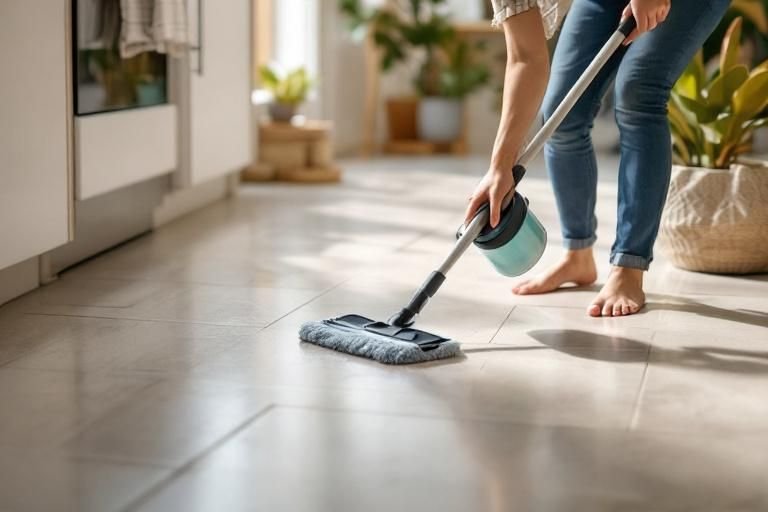
Are your kitchen floor tiles looking dull and dirty? You’re not alone; many homeowners struggle with maintaining the shine and cleanliness of their tiles. Learning how to clean kitchen floor tiles at home can save you time and money while ensuring your kitchen remains a welcoming space. With over 15 years of experience in home cleaning strategies, I will guide you through effective methods and simple solutions to restore your tiles to their original luster. From understanding the right cleaning agents to mastering techniques that prevent future grime buildup, this article will equip you with all the knowledge you need for tile maintenance. Let’s dive in and discover the best practices for keeping your kitchen floor tiles sparkling clean!
Understanding Kitchen Floor Tiles
Kitchen floor tiles come in various materials, including ceramic, porcelain, and natural stone. Each type requires distinct cleaning methods to maintain their appearance and longevity. Understanding your tile’s material is crucial for effective cleaning. Ceramic and porcelain tiles are generally more resistant to stains and moisture, while natural stone tiles like granite or marble may require specialized care due to their porous nature. Familiarizing yourself with the tile’s finish (glossy or matte) also affects the cleaning process, as certain cleaners may dull finishes over time.
Types of Floor Tiles
The most common types of kitchen floor tiles are ceramic, porcelain, and natural stone. Ceramic tiles are durable and resistant to moisture, making them ideal for kitchens. Porcelain tiles are denser and less porous than ceramic, offering better stain resistance. Natural stone tiles, while beautiful, require more care due to their porous nature, which can trap dirt and stains.
Tile Finishes
Tiles come in various finishes that impact cleaning methods. Glossy finishes are easier to clean but may show scratches more easily, while matte finishes can hide dirt better but may require more scrubbing. Understanding the finish will help you select the right cleaning products and techniques to avoid damage.
Key Points:
- Knowing tile types helps choose appropriate cleaning methods
- Tile finishes influence cleaning technique and product selection
Basic Cleaning Techniques for Kitchen Floor Tiles
Cleaning kitchen floor tiles requires a systematic approach to ensure effectiveness without causing damage. Start with regular sweeping or vacuuming to remove debris and prevent scratches. Following this, damp mopping with a suitable cleaner can help maintain the tiles’ shine and remove stubborn stains. For deeper cleaning, consider using a steam cleaner or a specialized tile cleaner. Always test new cleaning methods on a small, inconspicuous area first to ensure compatibility with your tiles.
Daily Maintenance
Regular maintenance is key to preserving the beauty of kitchen floor tiles. Sweep or vacuum daily to prevent dirt buildup. Wipe up spills immediately to avoid stains, especially on porous tiles. This proactive approach not only keeps your tiles looking fresh but also extends their lifespan.
Deep Cleaning Methods
For deeper cleaning, consider mopping with a mixture of warm water and vinegar or a dedicated tile cleaner. Use a soft-bristle brush on grout lines and stubborn stains. Avoid abrasive cleaners, as they can scratch the surface. Always rinse with clean water to remove any residue after cleaning.
Key Points:
- Regular maintenance prevents dirt buildup
- Deep cleaning enhances tile longevity and appearance
Understanding Tile Types and Cleaning Needs
Different types of kitchen floor tiles require specific cleaning approaches. Ceramic, porcelain, and natural stone tiles all have unique characteristics that determine how they should be maintained. For instance, ceramic and porcelain are generally more resistant to stains and easier to clean, while natural stone may require more specialized care to prevent damage. Recognizing your tile type is the first step in developing an effective cleaning routine that preserves their appearance and longevity.
Identifying Your Tile Type
Begin by examining your tiles closely. Ceramic tiles typically have a glossy finish and are non-porous, while porcelain is denser and usually has a matte finish. Natural stone tiles, such as granite or marble, are porous and require sealing. Understanding these differences ensures you choose appropriate cleaning methods.
Assessing Cleaning Frequency
Your cleaning frequency may depend on foot traffic and spills. High-traffic areas may require weekly cleaning, while less used spaces could be cleaned bi-weekly. Regular maintenance prevents dirt buildup and keeps your tiles looking fresh.
Key Points:
- Different tile types have specific cleaning requirements.
- Regular cleaning prevents long-term damage and maintains tile appearance.
💡 Always test cleaning solutions on a small, inconspicuous area to avoid damaging your tiles.
💡 Use a microfiber mop to prevent scratches and effectively lift dirt without harsh chemicals.
Effective Cleaning Techniques for Kitchen Floor Tiles
Cleaning kitchen floor tiles involves several effective techniques tailored to the tile type. For general cleaning, a mix of warm water and mild detergent can be used to scrub away dirt and grime. For deeper cleaning, consider using a steam mop or a solution of vinegar and water, ensuring it’s suitable for your tile type. Always follow the correct method to maintain the integrity of your tiles while achieving a spotless surface.
Daily Cleaning Routine
A simple daily cleaning routine can include sweeping or vacuuming to remove loose dirt and debris. Follow this with mopping using a mild detergent solution. Avoid using excessive water, especially on porous tiles, to prevent moisture damage.
Dealing with Stains and Grout
For stubborn stains or dirty grout lines, use a paste of baking soda and water. Apply it to the stained areas and scrub gently with a soft brush. This method is effective and avoids harsh chemicals that could damage the tile surface.
Key Points:
- Establish a daily cleaning routine for optimal maintenance.
- Address stains promptly to prevent them from setting in.
💡 For tough stains, allow cleaning solutions to sit for a few minutes before scrubbing for better results.
💡 Use a pH-neutral cleaner to maintain the shine and durability of your tiles.
EXPERT TIPS Pro Advice
Use warm water for cleaning.
Warm water effectively dissolves grease and grime, making it easier to clean tiles without harsh chemicals.
Seal natural stone tiles regularly.
Sealing prevents stains and moisture penetration, extending the life of your natural stone tiles.
Avoid acidic cleaners on natural stone.
Acids can etch and damage natural stone surfaces, so stick to pH-neutral cleaners for safe maintenance.
Implement a no-shoes policy in the kitchen.
Reducing dirt and debris tracked in from outside helps maintain cleaner floors and reduces the frequency of deep cleaning.
Rotate your mop frequently.
Using a clean side of the mop or changing mops regularly prevents spreading dirt back onto the tiles.
Frequently Asked Questions
Conclusion
Cleaning kitchen floor tiles at home involves regular maintenance and using effective methods like vinegar solutions and baking soda. Understanding the importance of cleaning frequency and stain removal techniques helps maintain both hygiene and aesthetics.
🎯 Key Takeaways:
- Clean tiles weekly to prevent dirt buildup.
- Use vinegar and baking soda for effective cleaning.
- Diluted bleach can disinfect but test first.
- Seal tiles every 1-3 years for protection.
Expert Advice: Stay consistent with your cleaning routine, and use natural solutions where possible to maintain a safe and healthy kitchen environment.
Start your tile cleaning routine today for a fresher, cleaner kitchen!
Leave a Reply