
How to Make Electronic Things at Home: A Beginner’s Guide
Have you ever wondered how to make electronic things at home but felt overwhelmed by the complexity? You’re not alone. Many aspiring makers are eager to dive into electronics but often don’t know where to start. In this comprehensive guide, we’ll walk you through the basics of DIY electronics, providing you with the knowledge and confidence to create your own projects. With over 15 years of experience in the world of electronics and DIY, I’ll share proven techniques and easy-to-follow steps that will ignite your creativity. By the end of this article, you’ll discover not only how to make simple electronic devices but also tips for advancing your skills and avoiding common pitfalls.
Understanding Basic Electronic Components
Before diving into making electronic things at home, it’s essential to understand the basic components that form the building blocks of most projects. These components include resistors, capacitors, diodes, transistors, and microcontrollers. Familiarizing yourself with these parts will empower you to construct various electronic devices and circuits. Each component has its unique function, such as controlling current flow or storing energy, which is crucial for your projects. Additionally, knowing how to read circuit diagrams will help you visualize how these components interact, enabling you to troubleshoot and innovate effectively.
Resistors and Their Function
Resistors are passive components that limit the flow of electric current in a circuit. They are measured in ohms and can protect sensitive components from damage due to excess current. Understanding how to calculate resistance values and use resistors in series and parallel configurations is vital for any beginner. This foundational knowledge will assist you in designing circuits that function correctly and safely.
Capacitors and Their Storage Ability
Capacitors are components that store and release electrical energy in a circuit. They are measured in farads and can smooth out voltage fluctuations or provide bursts of energy. Learning about different types of capacitors, such as electrolytic and ceramic, will allow you to choose the right one for your projects. Understanding their charging and discharging cycles is also crucial for applications like timing circuits or power supply systems.
Microcontrollers: The Heart of Modern Electronics
Microcontrollers are compact integrated circuits designed to govern a specific operation in an embedded system. They can be programmed to perform various tasks, making them essential for DIY electronics projects. Familiarizing yourself with programming languages used for microcontrollers, like Arduino or Raspberry Pi, will enable you to create interactive devices that can respond to inputs. Knowing how to set up and code a microcontroller can significantly expand your project possibilities.
Key Points:
- Familiarize yourself with basic electronic components
- Understanding circuit diagrams is essential for troubleshooting
Essential Tools and Safety Measures
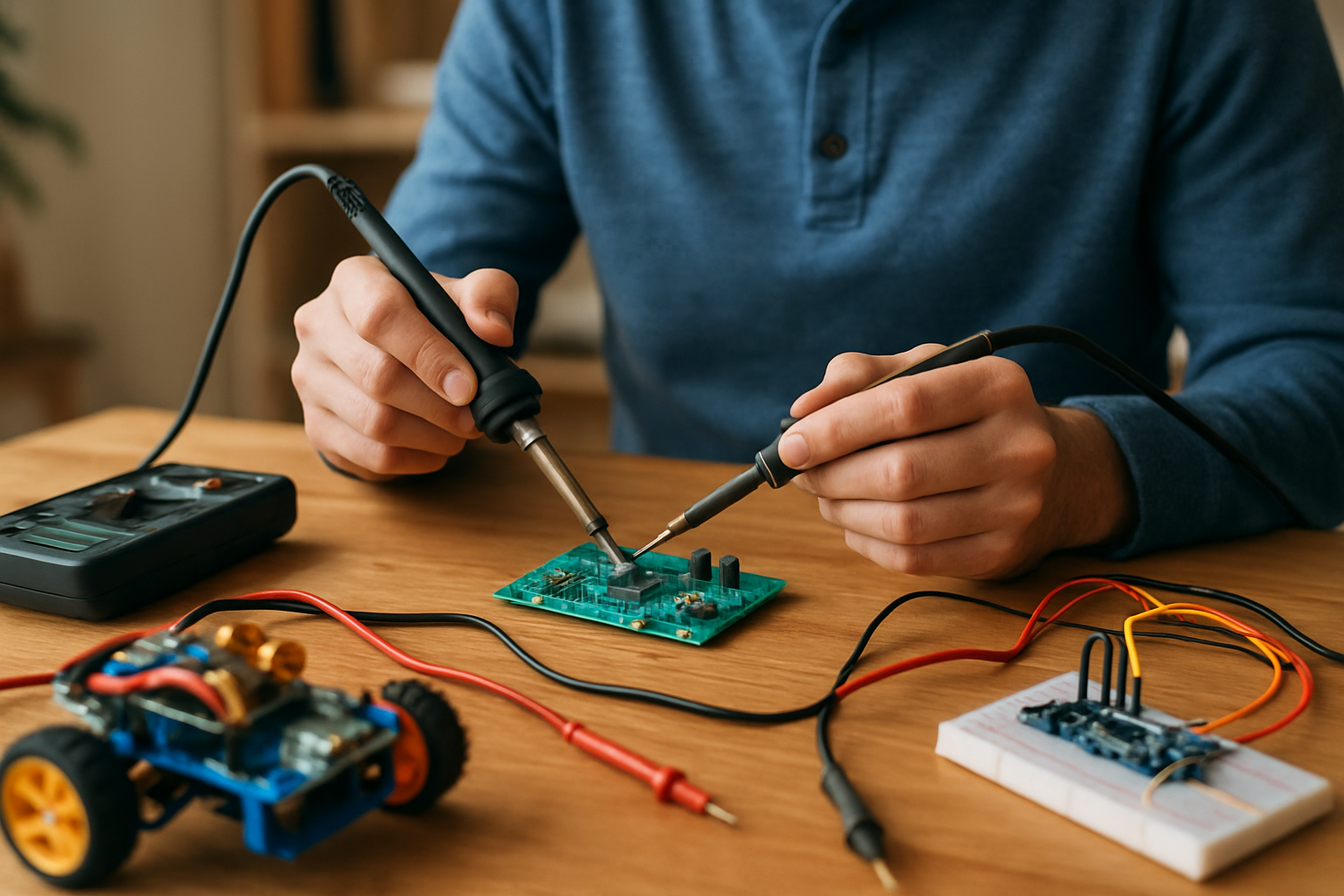
Having the right tools is crucial when making electronic things at home. Basic tools like soldering irons, multimeters, and breadboards will facilitate most projects. A soldering iron is essential for making permanent connections between components, while a multimeter helps in measuring voltage, current, and resistance. Using a breadboard is a great way to prototype circuits without soldering, allowing for easy adjustments. Moreover, implementing safety measures is equally important to prevent accidents. Always work in a well-ventilated area, use safety glasses, and ensure that your workspace is organized to minimize risks.
Basic Tools for Electronics Projects
Some of the essential tools include a soldering iron for permanent connections, a multimeter for testing and measuring electrical values, and wire strippers for preparing cables. Additionally, having a set of precision screwdrivers and tweezers can help with assembling small components. Investing in these tools will significantly improve your efficiency and accuracy in building electronic projects.
Safety Protocols to Follow
To ensure a safe working environment, always wear safety glasses to protect your eyes from flying debris when soldering or cutting. Working on a non-static surface can prevent damage to sensitive electronic components. Additionally, avoid working with live circuits and always double-check connections before powering up your project. Developing these habits early on will help you create a safer workspace and minimize the risk of accidents.
Organizing Your Workspace
An organized workspace is vital for efficient project execution. Use bins or drawers to store components and label them for easy access. Keeping tools in a designated area prevents misplacement and saves time. Additionally, having a clean desk will reduce distractions and help maintain focus on your projects. A tidy workspace promotes productivity and can lead to better project outcomes.
Key Points:
- Invest in essential tools for electronics projects
- Implement safety protocols to prevent accidents
Understanding Basic Electronics Components
To successfully make electronic things at home, it’s essential to grasp the basic components involved in electronics. Resistors, capacitors, diodes, and transistors are foundational elements that affect how circuits function. Understanding how these components interact is crucial for troubleshooting and building projects. Begin by studying circuit diagrams, which visually represent the connections between components. Familiarize yourself with terms like voltage, current, and resistance, as these are fundamental to circuit functionality. Knowledge of these basics will empower you to innovate and create more complex electronic devices at home.
Resistors and Their Role
Resistors limit the flow of electric current in a circuit, protecting sensitive components from damage. They are measured in ohms and can be combined in series or parallel to achieve desired resistance levels. When designing your projects, calculate the required resistance using Ohm’s Law (V = IR), which relates voltage (V), current (I), and resistance (R). This understanding is vital for ensuring your circuits work as intended.
Capacitors: Storing Energy
Capacitors store and release electrical energy, playing a crucial role in smoothing out voltage fluctuations in circuits. They are characterized by their capacitance, measured in farads. In your projects, use capacitors to stabilize power supplies or filter signals. Learn how to calculate the total capacitance when using multiple capacitors in parallel or series to optimize circuit performance.
Transistors: The Building Blocks of Modern Electronics
Transistors act as switches or amplifiers in circuits, allowing for complex control of electrical signals. Understanding how to use NPN and PNP transistors can enable you to create everything from simple switches to audio amplifiers. Study their characteristics and applications to leverage their capabilities in your projects effectively.
Key Points:
- Familiarity with basic components is crucial for building functional electronic projects.
- Understanding how to calculate resistance and capacitance will enhance your design capabilities.
💡 Always double-check your connections before powering up a circuit to avoid short circuits.
💡 Use a multimeter to test components and ensure they are functioning correctly before integrating them into your project.
Building and Testing Your First Circuit
Once you have a grasp of electronic components, the next step is to build and test your first circuit. Start with simple projects, such as a basic LED circuit or a buzzer alarm, to gain practical experience. Use a breadboard for prototyping, as it allows for easy modifications without soldering. Follow circuit diagrams closely, and make sure to connect components as specified. Testing is a critical aspect of circuit building; use a multimeter to measure voltage and current at various points to ensure everything operates correctly. This hands-on experience is invaluable for honing your skills.
Choosing Your First Project
Select a simple project that aligns with your interests and skill level. For beginners, projects like a blinking LED or a basic circuit with a switch are ideal. These projects will help you understand how to integrate components and troubleshoot common issues. Gradually increase the complexity of your projects as you gain confidence and experience.
Using a Breadboard Effectively
A breadboard is an invaluable tool for prototyping circuits without soldering. Familiarize yourself with its layout, including power and ground rails. Start by placing components according to your circuit diagram, ensuring proper connections. This method allows for easy adjustments and experimentation, crucial for learning and refining your designs.
Testing and Troubleshooting Your Circuit
After assembling your circuit, testing is essential to verify functionality. Use a multimeter to check for continuity and measure voltage levels at various points. If your circuit doesn’t work as expected, troubleshoot by checking connections and component orientations. This iterative process helps develop critical problem-solving skills in electronics.
Key Points:
- Hands-on experience with simple projects builds confidence and reinforces theoretical knowledge.
- Effective testing and troubleshooting are essential skills for successful electronic projects.
💡 Document your circuit designs and any changes made during testing for future reference and learning.
💡 Start with low-voltage projects to minimize risks and ensure a safer learning environment.
EXPERT TIPS Pro Advice
Understand the principles of circuit design before starting projects.
A solid foundation in circuit design principles will prevent common mistakes and streamline your building process.
Experiment with different configurations of components.
Trial and error is a powerful learning tool. Experimenting with how components interact will deepen your understanding.
Join online forums or local maker groups.
Connecting with like-minded individuals can provide support, inspiration, and resources as you embark on your electronics journey.
Frequently Asked Questions
Conclusion
Making electronic things at home is an engaging way to learn about technology and enhance your problem-solving skills. Start with simple projects and gradually advance as you gain confidence. Utilize online resources and community support to fuel your creativity and knowledge.
🎯 Key Takeaways:
- Start with easy projects like LED circuits or flashlights.
- Utilize online courses and tutorials for learning.
- Creating electronics fosters creativity and problem-solving.
- Essential tools include a soldering iron and multimeter.
- Source materials from local stores and recycling.
Expert Advice: Embrace the learning process. Don’t be afraid to make mistakes, as they are valuable opportunities for growth. Experimenting with electronics can lead to rewarding experiences and newfound skills that can benefit you in various areas of life.
Begin your electronic journey today by choosing your first project and gathering the necessary materials!
Leave a Reply