
How to Make Electronic Mosquito Repellent at Home Effectively
Are you tired of battling pesky mosquitoes during outdoor activities? Did you know that you can create your own electronic mosquito repellent at home? With rising concerns over chemical repellents, many people are seeking natural and effective alternatives. In this article, we will guide you through the process of making an electronic mosquito repellent that not only helps keep mosquitoes at bay but is also budget-friendly and eco-conscious. Drawing on years of expertise in homemade pest control solutions, we’ll share step-by-step instructions, essential components, and tips for maximizing effectiveness. By the end of this article, you’ll be well-equipped to enjoy your outdoor spaces without the annoyance of mosquito bites.
Understanding Electronic Mosquito Repellents
Electronic mosquito repellents work by emitting sounds or signals that deter mosquitoes. These devices can be effective in reducing mosquito presence in a specific area. Understanding their functionality is crucial for those looking to create a homemade version. The two primary methods for electronic repellents are ultrasonic sound waves and electromagnetic frequencies. Both methods aim to disrupt the communication and navigation systems of mosquitoes, making it harder for them to locate humans. Although scientific studies on the efficacy of homemade electronic repellents are limited, they can still serve as an innovative and eco-friendly option for pest control at home.
Types of Electronic Repellents
There are primarily two types of electronic mosquito repellents: ultrasonic devices and those that use electromagnetic frequencies. Ultrasonic repellents emit high-frequency sounds that are typically inaudible to humans but can be disturbing to mosquitoes. On the other hand, electromagnetic devices work by altering the electromagnetic field around them, which can disrupt mosquito behavior. Each type has its own merits, and understanding these differences can help you choose the best approach for your homemade version.
How Mosquitoes Navigate
Mosquitoes navigate using a combination of visual cues, temperature gradients, and chemical signals. They are attracted to carbon dioxide and certain body odors, which guide them to potential hosts. By utilizing electronic repellents that disrupt their natural navigation, it’s possible to create a less inviting environment. Understanding this navigation process is key to designing an effective homemade repellent, as it helps you identify which frequencies or signals might be most effective.
Key Points:
- Electronic repellents can reduce mosquito presence.
- Understanding mosquito navigation aids in creating effective repellents.
Basic Components for Homemade Electronic Repellent
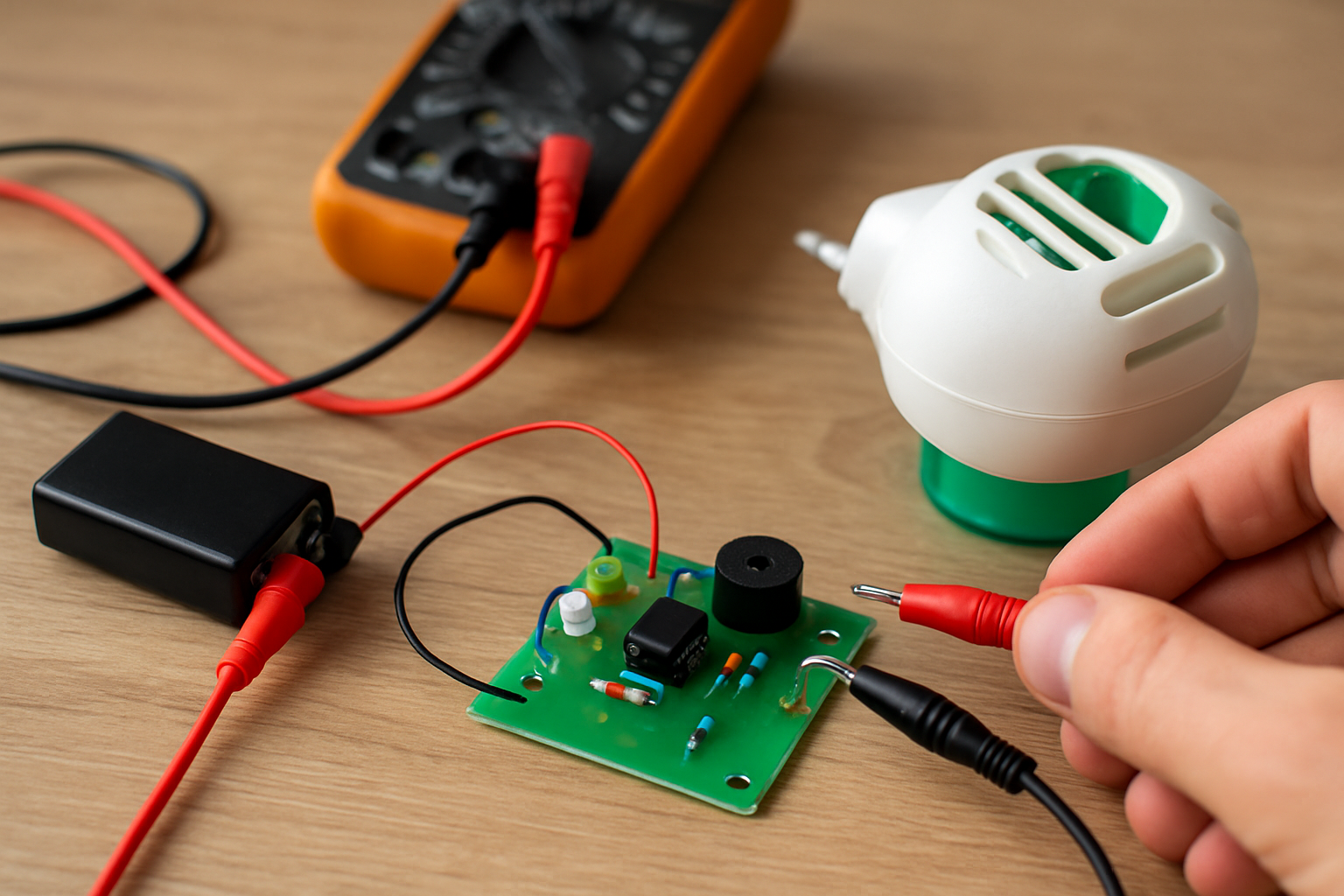
Creating an electronic mosquito repellent at home requires a few basic components. The most common materials include a power source, a sound-emitting device, and an enclosure to house the components. A simple circuit can be built using a microcontroller, which can generate the desired frequency. This setup can be adjusted to emit different sound patterns, which may enhance effectiveness. Additionally, ensuring your device is portable and weatherproof can extend its usability outdoors. Familiarizing yourself with basic electronics and circuit design will significantly aid in the construction process.
Essential Materials
To build your electronic mosquito repellent, you will need basic electronic components such as a microcontroller, a speaker, a power source (like batteries), and connecting wires. You may also want to include a housing unit to protect your device from the elements. Understanding how to connect these components correctly will allow you to create a functional unit that can emit the desired frequencies effectively.
Basic Circuit Design
A simple circuit design for an electronic mosquito repellent involves connecting the microcontroller to the speaker and power source. The microcontroller can be programmed to emit specific frequencies that are thought to repel mosquitoes. Basic knowledge of circuit design is crucial, as it will allow you to troubleshoot and modify your device as needed. Online resources can provide guidance on creating circuits for beginners.
Key Points:
- Basic components are essential for device functionality.
- Understanding circuit design is crucial for troubleshooting.
Understanding Electronic Mosquito Repellents
Electronic mosquito repellents work by emitting ultrasonic sound waves that are said to deter mosquitoes. These devices can be made at home using simple electronic components. Understanding the science behind these repellents is essential for effective construction. The ultrasonic frequencies typically range from 20 kHz to 65 kHz, which are inaudible to humans but can disrupt mosquito behavior. Knowing how to manipulate sound frequency and amplitude can enhance the efficacy of your homemade device.
The Science Behind Ultrasonic Waves
Ultrasonic waves are sound waves above the human hearing range. Mosquitoes are sensitive to these frequencies, which can interfere with their navigation and mating behavior. By understanding the relationship between frequency and mosquito response, you can create a more effective device. Research indicates that a frequency around 25 kHz is most effective in repelling certain mosquito species.
Basic Components Needed
To create an electronic mosquito repellent, you’ll need a few basic components: a microcontroller, an ultrasonic speaker, a power source, and connecting wires. The microcontroller serves as the brain of the device, controlling the frequency emitted by the ultrasonic speaker. A small battery or USB power source can be used to provide energy. Knowing how to connect these components will ensure your device functions smoothly.
💡 Experiment with different frequencies to find what works best for your area
Building Your Homemade Device
Constructing your own electronic mosquito repellent requires basic electronic skills and knowledge of circuit design. Begin by designing a circuit that connects your microcontroller to the ultrasonic speaker. Next, write a simple program to control the frequency output. Once assembled, test your device in various environments to assess its effectiveness. Fine-tuning the design may involve adjusting the position of the speaker or modifying the frequency.
Circuit Design Basics
A successful circuit design involves understanding how to connect the microcontroller to the ultrasonic speaker properly. Use a breadboard for initial testing and ensure all connections are secure. Pay attention to the polarity of the components, as incorrect connections can prevent your device from working. Ensure your design includes a switch for easy operation.
Programming the Microcontroller
Programming the microcontroller is a crucial step. Use basic coding languages compatible with your microcontroller to set the desired frequency and duration for emitting ultrasonic waves. Start with a simple loop that continuously emits sound at the chosen frequency. Testing the code before final assembly can save you troubleshooting time later on.
💡 Keep a log of your experiments to track which frequencies are most effective
EXPERT TIPS Pro Advice
Use a potentiometer for frequency adjustments
Incorporating a potentiometer allows you to easily adjust the frequency output, enabling you to find the most effective settings for your specific environment.
Consider housing your device appropriately
Using a weatherproof enclosure can ensure that your device lasts longer outdoors and operates effectively in various weather conditions.
Test different speaker placements
The position of the ultrasonic speaker can significantly impact its effectiveness; experiment with different placements to find the optimal position for repelling mosquitoes.
Frequently Asked Questions
Conclusion
Creating an electronic mosquito repellent at home is a simple process that combines essential oils, a fan, and a power source. By understanding the materials, effectiveness, and safety precautions, you can successfully deter mosquitoes naturally and cost-effectively.
🎯 Key Takeaways:
- Use essential oils like citronella and eucalyptus for effectiveness.
- A fan helps disperse oils, enhancing protection.
- Regularly refresh oils to maintain effectiveness.
- Ensure good ventilation and safety around children and pets.
Expert Advice: Experiment with different essential oil combinations to find what works best for your environment. Monitor the repellent’s effectiveness, and don’t hesitate to adjust your approach as needed for optimal results.
Start your DIY project today and enjoy a mosquito-free space naturally!
Leave a Reply