
How to Make Electronic Things at Home Easy: Your Ultimate Guide
Are you curious about how to make electronic things at home easy? Many people find electronics daunting, but it doesn’t have to be that way. With a bit of guidance and the right resources, anyone can create fascinating electronic projects right in their own garage or workshop. As a seasoned expert in DIY electronics, I will walk you through the essential techniques, tools, and tips that make home electronics accessible to everyone, regardless of their skill level. By the end of this guide, you will learn practical methods to start your own projects, troubleshoot common issues, and explore advanced concepts that can lead to even more complex creations. Get ready to unleash your creativity and innovation in the world of electronics!
Understanding Basic Electronics Concepts
Before embarking on creating electronic projects at home, it’s crucial to grasp foundational concepts such as voltage, current, and resistance. These principles form the backbone of all electronic devices and projects. Voltage, measured in volts, is the electrical force that pushes electrons through a circuit. Current, measured in amperes, is the flow of electric charge, while resistance, measured in ohms, determines how easily current can flow. Familiarizing yourself with Ohm’s Law, which states that Voltage = Current x Resistance, will help you understand the relationships between these elements and design effective circuits.
Components of Basic Circuits
A basic electronic circuit typically consists of a power source, conductive paths, and components like resistors, capacitors, diodes, and transistors. Understanding these components is critical as each serves a unique function. For example, resistors limit current flow, capacitors store energy, and diodes allow current to flow in one direction only. Becoming familiar with these components will enable you to create more complex projects down the line.
Tools and Materials for Beginners
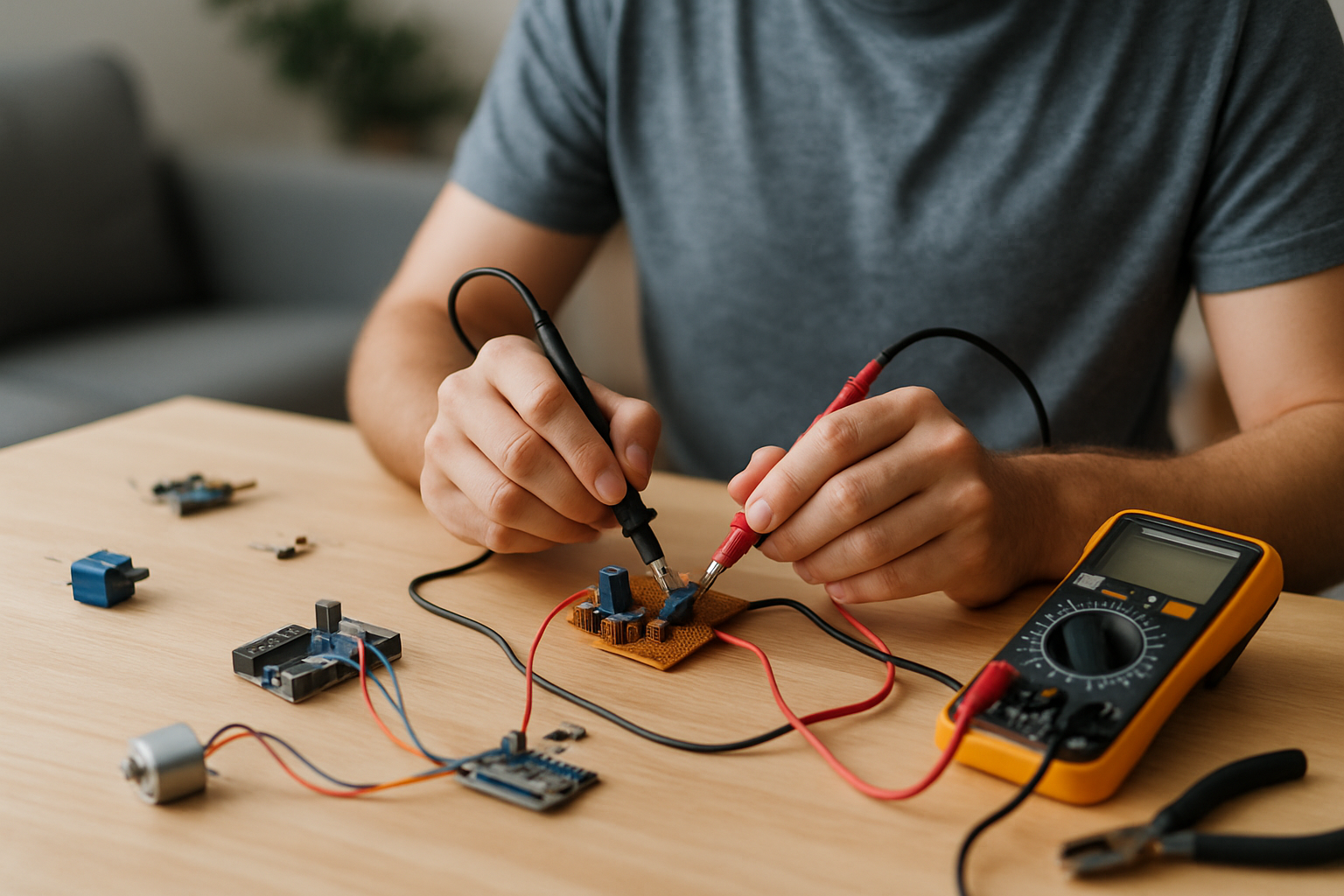
To start making electronics at home, you’ll need some essential tools and materials. A soldering iron, wire cutters, and a multimeter are vital for assembling and testing circuits. Breadboards are excellent for prototyping as they allow you to build circuits without soldering. Additionally, having a selection of wires, batteries, and basic electronic components will enable you to experiment and learn effectively.
Key Points:
- Grasping basic electronic concepts is crucial for project success.
- Familiarity with circuit components leads to better design skills.
Getting Started with Simple Projects
Once you understand the basics of electronics, the next step is to start with simple projects. These projects can help reinforce your learning and build confidence. Start with easy tasks such as creating a simple LED circuit or a basic buzzer circuit. These projects require minimal components and help you practice essential skills like wiring and soldering. As you gain experience, you can gradually increase the complexity of your projects, integrating more components and functionalities.
Creating an LED Circuit
A straightforward project for beginners is creating an LED circuit. This involves connecting an LED to a power source through a resistor to limit the current. Start by placing the components on a breadboard, connecting them with jumper wires. Once you’ve successfully lit the LED, you can modify the circuit by adding more LEDs or changing resistor values to see how it affects brightness.
Exploring Basic Sensors
Once you’re comfortable with simple circuits, consider incorporating basic sensors like light or motion sensors. These components can add interactivity to your projects. For example, a light sensor can turn on an LED when it gets dark. This type of project not only enhances your understanding of electronics but also introduces you to programming concepts if you use a microcontroller for automation.
Key Points:
- Start with simple projects to build confidence.
- Progressively increase project complexity for continued learning.
Understanding Basic Electronics Concepts
Before diving into creating electronic things at home, it’s vital to grasp some foundational concepts of electronics. Understanding voltage, current, resistance, and circuits will empower you to troubleshoot and innovate effectively. Start by familiarizing yourself with Ohm’s Law, which defines the relationship between voltage (V), current (I), and resistance (R) in a circuit. This knowledge is crucial for ensuring your projects function as intended and for making adjustments when problems arise.
Components of Electronics
Every electronic project requires basic components such as resistors, capacitors, diodes, and transistors. Resistors limit current, capacitors store electrical energy, diodes allow current to flow in one direction, and transistors act as switches or amplifiers. Understanding these components helps in selecting the right parts for your projects and troubleshooting.
Circuit Design Basics
Once you understand the components, the next step is to learn how to design circuits. Start with simple series and parallel circuits to understand how current flows. Use circuit simulation software to visualize and test your designs before physically assembling them. This practice can save time and resources by identifying potential issues early in the design process.
💡 Begin with simple projects to build confidence
💡 Document your designs and modifications for future reference
Hands-On Projects for Beginners
Engaging in hands-on projects is one of the most effective ways to learn how to make electronic things at home. Start with simple kits that provide all necessary components and instructions. As you gain confidence, experiment with modifying existing designs or creating your own from scratch. This process not only solidifies your understanding but also fosters creativity and problem-solving skills.
Creating a Basic LED Circuit
A simple LED circuit is a great starting point for beginners. Gather a battery, resistor, and an LED. Connect the resistor to the positive terminal of the battery, followed by the anode of the LED. Finally, connect the cathode of the LED back to the negative terminal. This project teaches the basics of circuit assembly and the importance of current limiting.
Building a Simple Alarm System
Once comfortable with basic circuits, try building a simple alarm system using a buzzer, a switch, and a power source. When the switch is pressed, it completes the circuit and activates the buzzer. This project introduces concepts like sensors and alerts, enhancing your understanding of circuit applications in real-world scenarios.
💡 Always check connections before powering up your project
💡 Use a multimeter to troubleshoot any circuit issues
EXPERT TIPS Pro Advice
Start small and scale up gradually
Beginning with simple projects builds confidence and foundational skills, making more complex projects manageable.
Keep a dedicated workspace
A clean, organized workspace minimizes distractions and makes it easier to focus on your projects.
Join online communities
Participating in forums or groups can provide support, inspiration, and solutions to common problems you may encounter.
Document your learning process
Keeping a journal of your projects and lessons learned helps reinforce knowledge and serves as a valuable resource for future projects.
Experiment with modifications
Modifying existing projects fosters creativity and deeper understanding of how components interact within circuits.
Frequently Asked Questions
Conclusion
Making electronic things at home can be an enjoyable and educational experience. By starting with simple projects and utilizing readily available tools, you can build your skills over time. Regular practice and troubleshooting will enhance your understanding and creativity in electronics.
🎯 Key Takeaways:
- Begin with simple projects to build confidence.
- Gather essential tools for effective learning.
- Regular practice improves electronic skills.
- Join communities for support and inspiration.
Expert Advice: Stay curious and don’t hesitate to experiment. Mistakes are part of the learning process, so embrace them as opportunities for growth in your electronic endeavors.
Start your journey today by selecting a simple project that excites you and dive in!
Leave a Reply