
How to Make Electronic Music at Home: A Step-by-Step Guide
Have you ever dreamed of creating your own electronic music at home? With the rise of technology, it’s now easier than ever to dive into music production without needing a professional studio. In this comprehensive guide, we will explore how to make electronic music at home, whether you’re a complete beginner or looking to refine your skills. You’ll learn about the essential equipment, software, and techniques you need to produce high-quality tracks. By the end of this article, you’ll have the knowledge and confidence to start your own music production journey and unleash your creativity in the world of electronic music.
Understanding the Basics of Electronic Music
To create electronic music at home, it’s essential to grasp its foundational elements. Electronic music is primarily composed using electronic devices and software, utilizing synthesizers, drum machines, and digital audio workstations (DAWs). Understanding the genre’s history, key components, and production techniques will set you on the right path. Familiarize yourself with genres such as house, techno, and ambient, as these will influence your style and sound. Additionally, grasping basic music theory principles, such as melody, harmony, and rhythm, can enhance your compositions significantly.
Genres of Electronic Music
Start by exploring the various genres within electronic music, such as house, techno, and dubstep. Each genre has unique characteristics, tempos, and sound palettes. For instance, house music tends to have a steady four-on-the-floor beat, while techno is known for its repetitive and hypnotic elements. Listening to different genres will help you identify your preferences and inspire your own productions.
Essential Components of Electronic Music
Familiarize yourself with the core components of electronic music, including beats, basslines, and melodies. Beats are the rhythmic backbone, while basslines provide depth and groove. Melodies add a catchy element to your tracks. Understanding how these components interact is crucial for creating engaging music.
Key Points:
- Understanding electronic music history aids creativity.
- Familiarity with genres influences your sound.
Setting Up Your Home Studio
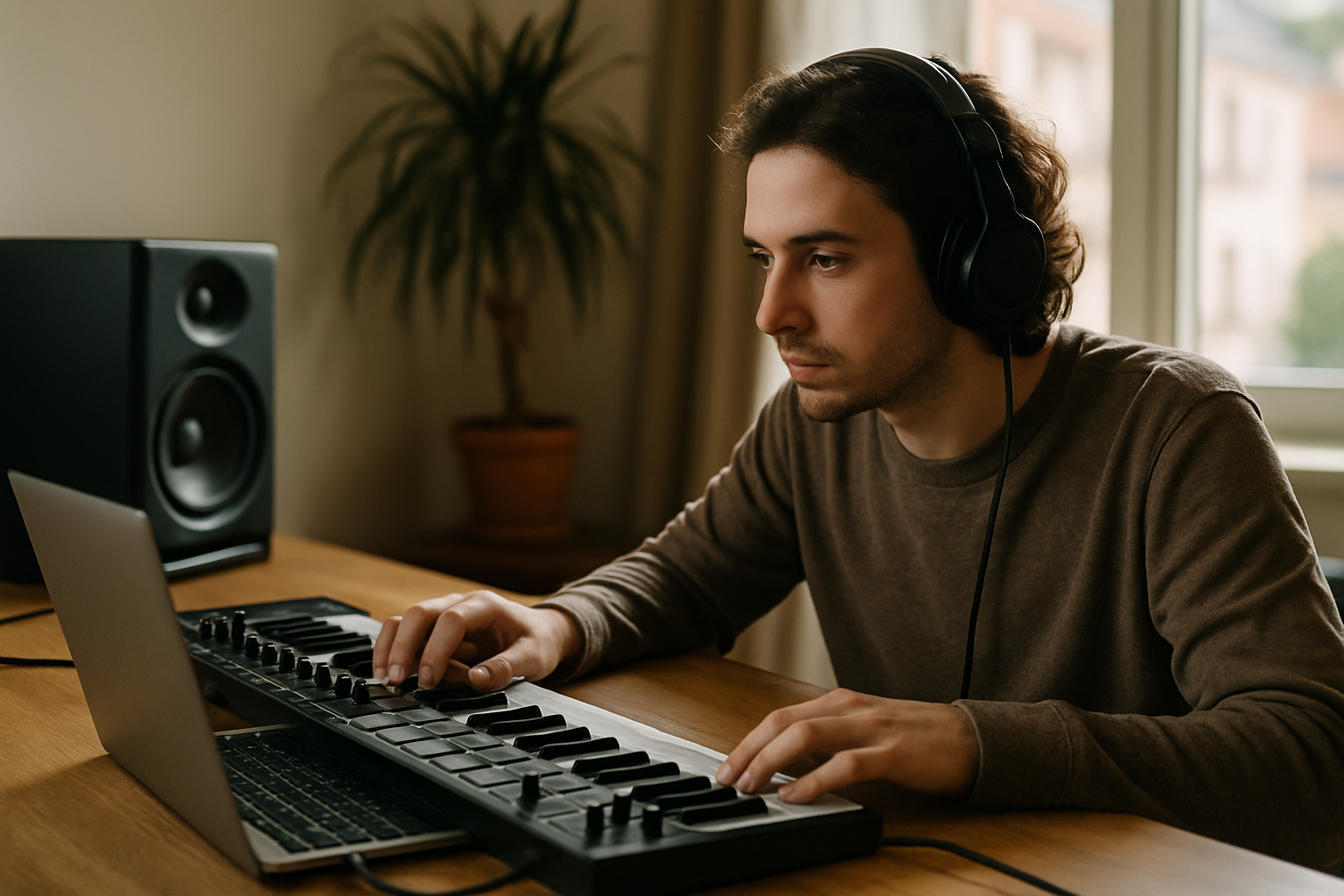
Creating a conducive environment for music production is vital for making electronic music at home. Start by designating a specific area in your home for music creation. Invest in essential equipment like a computer with sufficient processing power, headphones, and a MIDI keyboard. Additionally, consider soundproofing your space to minimize distractions and enhance sound quality. A well-organized workspace will stimulate creativity and productivity, allowing you to focus on your compositions without interruptions.
Essential Equipment for Beginners
As a beginner, focus on acquiring the fundamental equipment needed for electronic music production. A reliable computer, quality headphones, and a MIDI controller are essential. A digital audio workstation (DAW) is also crucial as it acts as your primary tool for composing, recording, and editing music. Start simple to avoid overwhelming yourself with complex setups.
Creating a Sound-Optimized Space
Sound quality greatly influences music production. To create a sound-optimized space, consider adding acoustic treatment materials like foam panels or carpets to absorb sound reflections. Ensure your workspace is organized and free from clutter, making it easier for you to concentrate on your projects. A well-arranged studio promotes creativity and efficiency.
Key Points:
- Designate a space to boost focus.
- Basic equipment is sufficient for starting out.
Understanding the Basics of Electronic Music Production
Before diving into creating electronic music at home, it’s essential to grasp the basic components of music production. Familiarity with concepts like rhythm, melody, and harmony will enhance your creativity. Start by learning about digital audio workstations (DAWs) and how they serve as the foundation for composing, recording, and editing music. Explore the different types of electronic music, including genres like house, techno, and dubstep, to identify what resonates with you. Once you have a grasp of these elements, you can begin experimenting with sounds and structures.
Choosing Your Digital Audio Workstation
A digital audio workstation (DAW) is the software used for recording and producing music. When selecting a DAW, consider factors like ease of use, available features, and compatibility with your operating system. Popular options include both free and paid versions, so assess your budget and production needs before making a choice. Familiarizing yourself with your chosen DAW’s interface will help streamline your music creation process.
Exploring Sound Design Techniques
Sound design involves creating unique sounds through synthesis, sampling, and effects processing. Start by learning about synthesizers, which generate sounds by manipulating waveforms. Experiment with different parameters like oscillators, filters, and envelopes to create distinctive tones. Additionally, explore sampling techniques where you can manipulate pre-recorded sounds to develop your unique style.
Key Points:
- Understanding music theory is crucial for electronic music production.
- Familiarity with your DAW can significantly improve your workflow.
💡 Begin with free DAWs to learn the basics before investing in premium software.
💡 Experiment with sound design to develop your signature sound.
Advanced Techniques for Music Creation
Once you have a handle on the basics, it’s time to explore advanced techniques that can elevate your electronic music production. Techniques like arranging, mixing, and mastering play vital roles in ensuring that your tracks sound polished and professional. Learning about these processes will help you create cohesive and engaging musical pieces. Additionally, incorporating automation and modulation can add depth and interest to your tracks, making them stand out.
Arranging Your Track Effectively
Arranging involves organizing your musical ideas into a structured format that progresses throughout the track. Start by outlining the sections of your song, such as intro, verse, chorus, and bridge. Use techniques like build-ups and breakdowns to maintain listener interest. Consider how elements like dynamics and instrumentation can create contrast and momentum within your arrangement.
Mixing and Mastering for Professional Sound
Mixing is the process of balancing levels, panning, and applying effects to individual elements in your track. Focus on achieving clarity and separation between instruments. Once you are satisfied with the mix, mastering is the final step that prepares your track for distribution by optimizing loudness and ensuring it translates well across different playback systems.
Key Points:
- Effective arrangement keeps the listener engaged throughout the track.
- Mixing and mastering are crucial for achieving a professional sound.
💡 Create a rough arrangement early in the process to guide your creativity.
💡 Learn and practice mixing techniques to enhance the quality of your tracks.
EXPERT TIPS Pro Advice
Experiment with different genres.
Exploring various genres can inspire creativity and lead to unique sound combinations that define your style.
Network with other producers.
Building relationships with fellow musicians can provide valuable feedback, collaboration opportunities, and industry insights.
Regularly practice and challenge yourself.
Setting goals and challenges will improve your skills and keep your music production fresh and exciting.
Invest in quality monitoring equipment.
Good speakers or headphones allow you to hear your music accurately, which is essential for effective mixing and mastering.
Frequently Asked Questions
Conclusion
Making electronic music at home is accessible with the right tools and knowledge. Start with a DAW, explore genres, and practice regularly. Understanding sound design and collaborating can enhance your skills. Embrace creativity while avoiding common beginner mistakes for better results.
🎯 Key Takeaways:
- Essential tools include a computer, DAW, and audio interface.
- Online resources are available for learning and practice.
- Exploring different genres helps refine your unique style.
- Sound design is crucial for creating distinctive tracks.
- Collaboration can lead to innovative musical ideas.
Expert Advice: Stay patient and persistent in your music journey. Experiment with different techniques and sounds, and don’t hesitate to seek feedback from peers. Your unique voice will develop over time through practice and exploration.
Start your electronic music journey today by setting up your workspace and experimenting with sounds. Join online communities to share your progress and learn from others.
Leave a Reply